Showing posts with label Routines. Show all posts

Wednesday, November 2, 2011

The Reading Pocket


Reading is one of the most important ways to enrich your child’s education. There are so many ways you can fit reading in to your everyday routine, whilst making it fun and enjoyable for you and your child. Reading can so easily be built into your child's night time routine, and become a part of the day that they really look forward to. As parents we often find it tricky to balance reading time between the kids, especially if they go to bed around the same time. Some stories can work for many age groups, more often than not, children are at different stages of their literacy development and hold different interests when it comes to reading. I know with my own two boys, one likes fiction stories and the other enjoys non-fiction books. Trying to give the boys my full attention while reading to them without the other interrupting was becoming a battle some nights. I needed to put a routine in place for our bedtime reading. This is when I found the very talented Ana from Le PetitPrincess, with an amazing creative flair and equally passionate love of books for children and she created The Reading Pocket.

How Do I Use The Book Pocket

After we have eaten our dinner, both boys go to the book shelf and choose two books that they would like me to read to them that night. They then put their books into their book pocket at the side of their bed, before we head off for bath time. After bath time, we clean teeth, say prayers and then both boys hop in to their beds and look through their books. I generally read to Master 3 first, while Master 5 looks through his books and waits for me. I read three books each night to each child, two that they have chosen and one that I have chosen. The book I read is one that I have chosen that is developmentally age appropriate, and also may have a theme or social message I'm trying to work on with that particular child. The book I choose is one that the boys have never seen. When we visit our local library I always borrow books that I choose for specific teaching points e.g sharing, loss of a pet, floods, starting school etc 

These colourful Reading pockets from Le Petit Princess are just perfect for promoting a love of books and reading with your child. There is a fabric for everyone, boys and girls, with a novelty print in 100 % quilters cotton and a block colour in 100% Cotton drill. A 1/2 metre slack tucks under the mattress making it easy to remove when washing your child's linen. Your Reading Pocket can be made personalised with yur child's name on it.These are available by ordering from Ana, lepetitprincess@live.com.au  for $20.

Saturday, September 18, 2010

The Importance of Teaching Children Routines


What is a routine? A routine is any activity that we do automatically on a daily basis.When children grow up without routines, duties and limits, they grow up in an uncontrolled manner and become difficult to manage.
I believe there are many benefits of Routines for Children
  • Increased performance at school
  • Sense of self-security
  • Ability to work in organised fashion
  • Ability to learn and keep healthy habits


Our biggest responsibility as parents is to provide a structured and nurturing environment in which our children can become prepared for life as an adult. It is critical that we stimulate our children's minds, social skills, emotions and bodies. Routines play an integral part in this stimulation, ensuring that children understand and embrace their duties and receive the nurturing and care that is so important to them.

I am a big advocate both as a mother, and a teacher that routines influence children’s emotional, cognitive, and social development. Predictable and consistent schedules in preschool classrooms help children feel secure and comfortable. Also, routines help children understand the expectations of the environment and reduce the frequency of behaviour problems, such as tantrums and acts of aggression.Consistent routines are an effective tool that parents can use to prepare their children for life, and to accomplish the stimulation and teaching that is so important to their development.


You could have a routine for:


Daily living...

Getting ready in the morning
Going to bed at night
Eating meals
Hygiene and health – for example, brushing teeth, washing hands
Using family resources like the computer and telephone
Pocket money, given at a regular time and day
Homework
Quiet time each evening
Hobbies
Sports/exercise

Household responsibilities...

Tidying up, looking after toys
Caring for pets
Looking after clothes and laundry
Chores – for example, setting the dinner table, packing away, unpacking the dishwasher
Shopping

Interacting and fun...

Greetings and goodbyes
Eating meals together
Regular play and talk times with a parent each day
Taking turns in talking with family members about their day
Special one-on-one time with a parent
Special weekly meals (such as pancakes on Sunday night or cooked breakfast Saturday morning)
Family days (family activity)
Family DVD nights
Family meetings
Annual events
Story time (book reading)

Social, religious and cultural...

Regular ‘play dates’
Regular contact with your extended family and friends
National/state/local celebration days, annual fetes or outings
Saying prayers
Observing religious events

Getting into Routine

Getting out of the house on time with children dressed, teeth brushed, tummies filled and backpacks in hand can be challenging. Getting out the door without nagging, yelling and racing may seem impossible. You can create an environment that teaches your child to take responsibility for his/her morning routine. And, have more pleasant interactions with your child each morning. Doing so will help your child feel more successful and better about him/herself. And your relationship with your child will also likely benefit from a smoother morning routine.

Getting through the morning routine can become relatively stress free. A key is to allow the strategy described below to work. That is, the child is responsible for doing his/her morning tasks. If you take responsibility by reminding, doing for, helping (when help isn’t required) your child will likely let you keep reminding, doing and helping him/her. Such a pattern actually teaches your child he/she doesn’t have to keep track or do his/her morning routine on his/her own. This plan is about teaching your child to take care of his/her morning routine as independently as possible. Here is one way to make your mornings more manageable and enjoyable.

Decide what time you need to walk out the door to be to school on time.
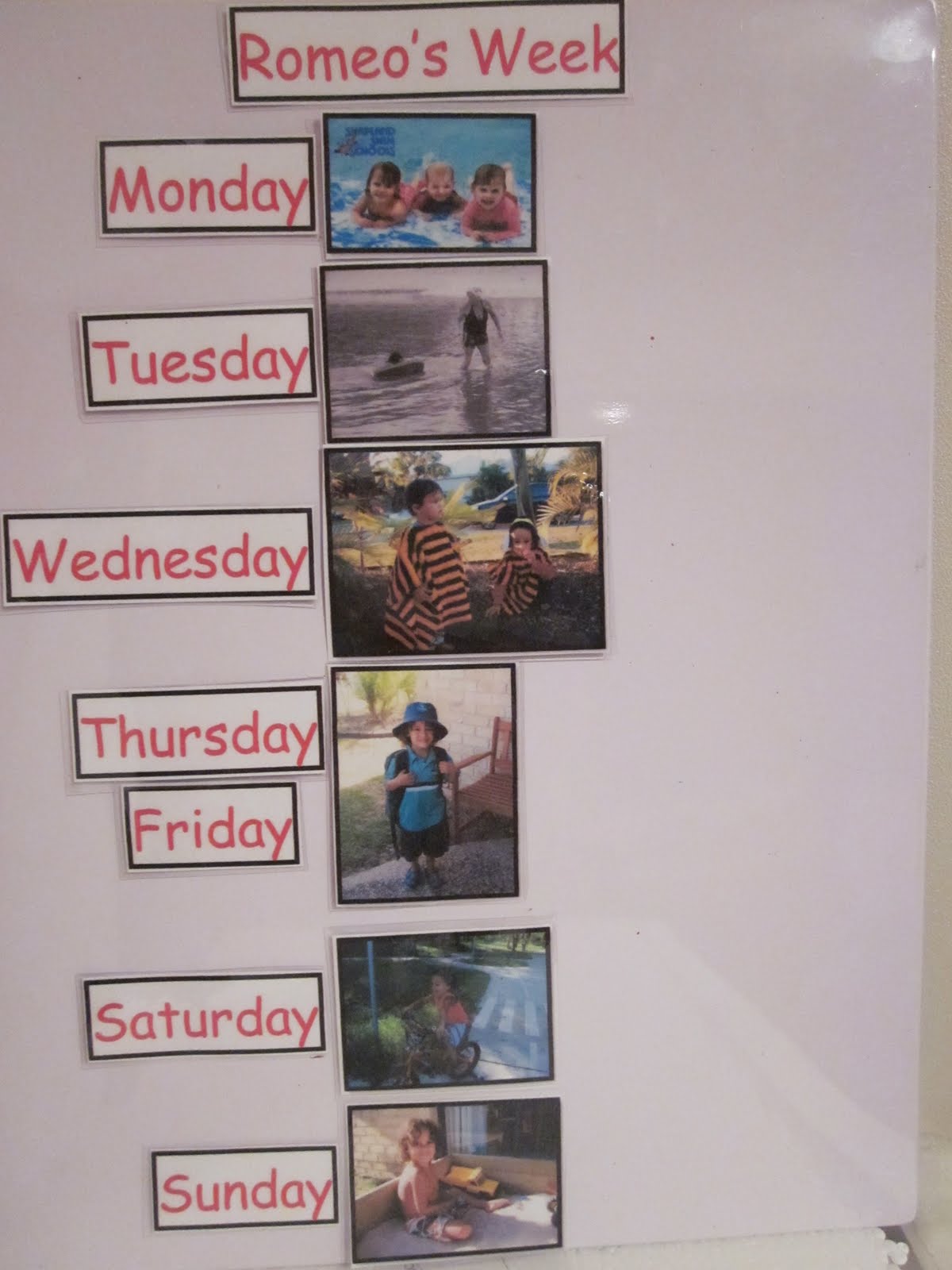
Think about all the things your child needs to do from the time he/she awakes until it is time to walk out the door. Think carefully about how much time is needed to complete the tasks and ensure you and your child have enough time to get everything done. Make a list of the things that need to be done in the order they are to be completed. For young children drawings or pictures maybe helpful on the list and placed on a whiteboard where a marker pen is provided to tick of each task as it is completed.


Identify with your child a preferred activity he/she would enjoy doing after the rest of the list is completed when he/she has at least 5 minutes of time to spare before it is time to leave. This activity must be approved by you. Some ideas include: doind a puzzle, looking at some books, playing with the dog, playing with a toy etc. Hang the list in a location the child can monitor. Inform your child he/she is to do each task on the list and check them off as they are completed. As your child engages in and/or completes a task provide specific praise for doing so (e.g., good job getting dressed, your hair looks good). You may say things like “Just 2 more tasks and you get to play with your dolly.” “Wow, you are doing great, I bet you will have time for a puzzle this morning.” When your child gets everything done with time to spare, make sure he/she gets to do the fun thing. Be equally diligent in making sure he/she does not get to do the fun activity if everything is not done on time. Walk out the door on time! If your child only gets part of the list done, walk out the door on time! He/she may end up dressing in the car or going to Pre-school with messy hair. The key is not to give in to the temptation to nag or scold or do the task for the child. Rather, talk with his/her teachers and let them know you are working on improving your child’s independence and being responsible so he/she may come to school hungry or with messy hair a few mornings. Chances are this won’t happen very many times before the child figures out how to get through his/her routine successfully. It is easy to eat breakfast on the go and I wouldn’t encourage this if you want breakfast eaten at home. Otherwise, chances are, breakfast will continue to be eaten in the car.
Planning and patience are key. If you give this strategy a try and it doesn’t seem to be working, make sure enough time is allowed for everything to be done, praise is readily being given and access to the fun activity is available after everything else is done. And remember, change takes time.

Wednesday, July 7, 2010

Discover How to Get Your Child to Brush!

Teaching your child to brush is a task that many of us parents have dreaded at one time or another. Having your child brush, however, is extremely important because it establishes good oral habits that last a lifetime. Despite the protests and the fight your child may give you, it is extremely important that you brush their teeth to reduce the amount of plaque causing bacteria in their mouths. Parents, in fact, need to be responsible for making sure their children's teeth are clean until the child reaches five to six years of age! This is because, on average, younger children do not have the manual dexterity required to brush teeth effectively.

The key to getting your child to brush is to make it fun. If your child still refuses to engage in these tooth brushing games, make tooth brushing appear as a fun activity they are missing out on. Have mum and/or dad go up to the bathroom eager to brush. Laugh a lot and make a lot of noise. Soon your child will realise that they are missing out on something fun and will want to join in.
Your enthusiasm is contagious! If you are enthusiastic about the activity, your children will be enthusiastic. Children are great emulators. They tend to want to do the things that their parents do. If your children see you brushing your teeth and displaying good dental habits, they will follow.


I'm a bit of a stickler when it comes to brushing (and eating too many sweets, although we certainly allow the boys to have them) and we use this chart that can easily be made by you at home. Each morning and night that Master 4 brushes his teeth (followed by a brush by mum!) he gets to put a tooth on his chart. I gave Master 4 a small egg timer that goes for 2 minutes - therefore we brush for a minute up top and a minute down below! On Friday night we add up how many teeth he has and this is rewarded with the total in marshmallows! The marshmallows then have to last from Friday night until the following week. I have to say Master 4 is quiet good at pacing the marshmallows out over the weekend! While Master 4 brushes I'm there singing the following tune using MY toothbrush as a microphone!!!


Ready, steady

Here we go

It’s a two minute brush

So don’t be slow

You got to have rhythm

You got to have style

Get into a groove

To brighten your smile

Bugs don’t brush, a bird has a beak

A crocodile would take all week

A cat prefers to sleep in the sun

She doesn’t know that brushing is fun

If you want to dazzle

Whenever you laugh

Then keep with the action

There’s a minute and a half


You got to have rhythm

You got to have style

Get into a groove

To brighten your smile

Your brush can be pink

Your brush can be blue

With stripes or spots

It’s up to you

It can cost a fortune

Or 50 cents

Powered by your arm

Or a battery


It’s not a competition

You don’t have to win it

Just keep on brushing

For one more minute

You got to have rhythm

You got to have style

Get into a groove

To brighten your smile

Brushing is good for dads and mums

And a friendly smile will make you chums

Brushing protects your teeth and gums

Although it won’t help you do your sums

Not too fast

Not too slow

It’s a circular motion

Thirty seconds to go

You got to have rhythm

You got to have style

Get into a groove

To brighten your smile

Brush to the north, brush to the south

Have a sunny disposition

Don’t be down in the mouth

Brush to the east, brush to the west

And you’ll have a smile

That’s the very, very best

Now you can spit!

Wasn’t that fun?

So let’s see that smile…

That’s brilliant!

You’re done