Children learn best when they are excited and engaged in learning which challenges them and shows them what they can do and stretches and excites their imagination. When there is joy in what they are doing, they learn to love learning. By offering every child – whatever their own individual characteristics – the chance to achieve their full potential we give them foundations for future learning, and for success in life.
Monday, August 9, 2010
Winnie The Witch

Sunday, August 8, 2010
Look Who’s Talking – Encouraging Your Toddler’s Inner Chatterbox!
- Between 18 and 24 months, language skills will really start to take off: experts call this the ‘naming explosion’ because your toddler could learn around ten or more new words each day as he begins to label things in his environment – cup, car, ball, bath… And, if he is really a little chatterbox, he could learn a new word every ninety minutes!
- At around two years (remember, all children develop at their own individual pace), your toddler will begin stringing words together. However, his sense of grammar will take a while longer to evolve: he will say things like “me go,” and he may use the same name for anything that falls into the same general category: all animals with four legs might be ‘dog’ and (oh dear!) any man could be a ‘daddy’. Grammar skills are related to maturity of an area of the brain that is dedicated to processing language and storing all the rules needed for stringing words together into meaningful sentences. This means that when your little chatterbox is developmentally ready, along with lots of exposure to language, he will soon be telling you about his world, describing his feelings and embarrassing you out loud and proud as he ‘parrots’ everything he hears – so watch your own language!
To encourage your little chatterbox:
Name everything
‘ Door knob!’, ‘chair’ , ‘dog’, ‘light’. Later add adjectives to describe his favorite toys, people and objects: ‘red jumper’, ‘cold milk’, ‘big truck.’
Encourage social language
You are your child’s most powerful model as you help her develop social skills such as greeting people politely, taking turns in conversation, making eye contact while talking and encouraging manners such as ‘please’, ‘thank-you’ and ‘excuse me’.
Listen
Your child’s attempts to use language will be reinforced when you pay attention, so remove background distractions such as the television and computer and give your child your full attention. Get down to your little one’s level and make eye contact as you talk to him, then pause and listen as he takes a turn at responding.
Be a role-model
Talk to your child in clear, simple, relevant language, avoiding baby talk. Model language by using ‘parallel talk.’ This means talking about everything your child is doing while she is doing it. For example, while your child is scooting along on her ride on, you could say, “You are riding your train. Wow! You are pushing with your feet. I like the way you are riding your train.” When you’re walking down the street, babble on about trees, cars, people, puddles – whatever your child sees, hears or smells. You can also model language by using ‘self-talk’ – talking about what YOU are doing as you work at home (I am getting the milk out of the fridge and now I will make a cup of tea) or as you drive along in the car (we are going round the corner at the traffic lights and we will buy some apples at the shop. Look at the big digger pushing the dirt into a hill!).
Encourage, don’t criticize
If somebody corrects you when you are doing your best, it does not inspire you to do better, does it? In fact, it might put you off trying for a while. So please don’t correct your child when she makes an attempt to talk but gets it a little wrong. Instead of telling her “it is ‘dog’, not ‘gog’,” simply model the correct word without a fuss, “yes, a big black dog.” Extend your child’s vocabulary. Your toddler’s level of understanding will be ahead of his ability to express himself. As he attempts to talk, model advanced grammar, add information and extend your tot’s vocabulary by repeating his words clearly and adding to them. For instance, if he says, “drink,” (or “dink,” as he points animatedly at the fridge), you can say, “you want a drink? Mummy will get you a drink.”
Extend language through experience
Your toddler will learn more from seeing animals at the zoo or a farm, than being shown flashcards of animals. You can then enjoy a shared experience and expand his language skills by reading books about the animals he has seen, or take photos and make your own picture book. As you read about animals, create discussion, “that’s a big pink pig. He likes to roll in mud. What noise does the pig make?” Letting him help with household chores will create opportunities to talk too. For instance, cooking together is great hands-on experience that will extend your tot’s vocabulary as you name ingredients, pour, chop and stir.
Exaggerate speech sounds
Some children acquire speech sounds much earlier or later than others, depending on coordination of the child’s lips tongue and palate. As your child matures, he will gradually correct his speech sound patterns. To encourage correct speech sounds, exaggerate sounds in words and play games with silly sounds –if silliness does not come easily, read Dr Seuss books for inspiration: “He can go like a train CHOO, CHOO, CHOO, CHOO. He can go like a clock. He can TICK. He can TOCK.”
Be animated!
Come on, shed those inhibitions by using gestures as you stress prepositions to help your tot understand ‘behind’ ‘on top’ and ‘under’!
Sing along
Whatever your singing ability, ban performance anxiety and sing out loud with your child. Singing helps break words into syllables and slows down the sounds of speech. Consider too, the repetition as little ones hear the words to familiar songs over and over. And, let’s face it, if you are going to repeat yourself endlessly (as you do!), it is far more fun to sing than to nag (‘this is the way we pick up the toys..’).
Read
Read aloud every day, several times a day. Short books with rhyme and repetition will encourage your child to join in and ‘read’ with you. You can play games by waiting for him to finish the line of a favourite rhyming book. As you enjoy reading together, your poppet will be naturally, joyously extending his vocabulary and his feeling for word patterns that make up speech and grammar.
Encourage social language
You are your child’s most powerful model as you help her develop social skills such as greeting people politely, taking turns in conversation, making eye contact while talking and encouraging manners such as ‘please’, ‘thank-you’ and ‘excuse me’.
Thursday, August 5, 2010
Creative teaching for your A, B, C ...

- Edible alphabets - Make alphabets soup from alphabet pasta and before the kids consume it, use this to teach them the abc. Alternatively, you can use alphabet biscuits .Your kid will enjoy learning abc and eating them as well !
- Alphabets decor - Use alphabets as decor around the house especially at your child's play area or bedroom. Not only are they decorative but they also becomes a great tool in teaching abc for kid. Hand-painted or stencilled lettering can be applied to all kinds of things. You can start by putting your child's name on the door followed by labelling drawers with their contents etc.
- Put Alphabet magnetic letters on your fridge for your child to play with.
- Have foam Alphabet letters in the bath to play with.
- Alphabet Stamps - use alphabet stamps and an ink pad to look at letters
- Make an Alphabet Book - Make your own alphabet book with your kids. You can purchase a blank paper book or you can make one with construction paper and a three-hole punch. Help your child make a page with each letter. You can have him write the letter or find the letter in an old magazine and cut it out. Cut out pictures from an old coloring book or magazine that has words that start with the letter on the page.
- Play the ABC game whenever you drive somewhere - This is an easy and fun way to teach your child the alphabet. Whenever you drive anywhere play the ABC game. Have your child find the letter A on billboards, or license plates, or signs. Start with the letter A and then look for letter b, c, etc. Once you finish the alphabet you can play again.
- Sing the Alphabet Song - Children love to sing and what better song to sing than the Alphabet Song. Start your day off with a song or two and be sure to include the ABC song.
- Play the Alphabet Memory Game - You can purchase flashcards of the alphabet or make your own with card stock paper or construction paper. Have your child match the capital letter A to the lowercase letter a. Or you can start with letters that are all lowercase or all capital. Each time your child matches the letters have him tell you what letter it is.
- Make an Alphabet Photo collage - Take a trip outside, to the park, zoo, or wherever. Spend your time looking for pictures of words that start with the letter A or B, or whichever letter you choose. When you get the photos developed let your child cut them out and glue them onto a collage. Have your child write or trace the letter for your photo collage onto construction paper and glue the photos around. Children love taking pictures and this is a lot of fun.
- Another Alphabet Game - We have probably all played this game before. Its fun for kids and can be fun for adults too. If your child is young you can just play a simple game. Start with the letter A. “A is for apple”, “B is for banana”, “C is for cat”, and continue on with all the letters. If your child is older you can play the game with a theme. For example, play lets do the alphabet game with fruit or animals. This way they are learning to sort animals or fruits and also practicing their alphabet.
- Play Alphabet Bingo- Make your own Bingo cards with construction paper. Write the letters of the alphabet on it. You can make this simple by making your Bingo cards more like a Tic-Tac-Toe game or you can make them like a traditional Bingo card. Call out the letters and have your child mark them or put a Bingo chip on the letter. When your child wins they can yell out Bingo! Purchase little prizes from the dollar store to make this even more fun.
- Make an Alphabet finger painting- Use poster board or construction paper and make a finger painting with different letters. Have your child paint the capital letter and lowercase letter. Let him decorate it with whatever colors he likes.
- Play the Alphabet Hide Away Game- Fill a bag with different objects that start with different letter sounds. For example, you could fill it with a car, a book, a pencil, etc. Show your child all the items in the bag. Then put all the items back in the bag. Have them find the items by touching them only. Say can you find something that starts with the letter B? Say what sound does the b make? Then see if they can find the book in your bag just by touching. This game is not only good for learning letters and sounds but also helps them with using their senses and tactile skills.
- Write Letters in Whipped Cream- Just grab some wax paper (or even a dark coloured plate will do), and some whipped cream in a can (Reddi-Whip is great), and start writing away! If the child is a little older, encourage him to try to make letters as well with the whipped cream. Perhaps add some strawberries to help eat the cream up. This would be fun as a dessert!
- Cut Letters Out with Play-Doh- Another idea for cookie cutters is to use them to mold play-doh into alphabet shapes. Yes, you can use the same cookie cutters, that's what dish soap is for! Store bought play-doh works great.
- Read Books Often that Promote the Alphabet- Reading is the basic key to learning. It will promote cognitive growth and can help children master the alphabet. Just visit your local library and check out some books. Some books to consider are Dr. Suess's ABC: An Amazing Alphabet Book, Chicka Chicka ABC, The A to Z Book, and Ocean Alphabet Book.
- Write a Letter on Child's hand - Choose a letter that the child needs to learn and write it on their hand with a magic marker in the morning. Throughout the day ask the child what the letter is and talk about it. Children may enjoy showing off their temporary body art to their friends!
- Create artwork with Alphabet Stickers, Stamps and Sponges- Most youngsters love playing with stickers and stamping stamps. You can purchase alphabet stickers/stamps at spotlight, lincrfta or a craft store. So, just grab some construction paper and let their creativity run loose! Be sure to ask the child what the letter is, encourage him/her to repeat, etc
- Make an Alphabet Beads Necklace or Bracelet- This is more for older children as well. Younger children can help, but might not have the dexterity to do it completely. Go to a craft store and purchase alphabet beads and string, along with some other beads for decoration. Help the child string the letters onto the bracelet or necklace, and - voila! - you've got an excellent teaching tool that can also be a piece of jewelry. For younger children, you might just let them watch you make it, and then they can enjoy wearing it.
- Play Educational Computer Games- There is a variety of computer software available that will teach your child the ABC's.
- Encourage Him/Her to Play With Alphabet Blocks- Baby's as young as a few months old will enjoy this activity.
- Point out the Letters On Signs Often- Whether you're driving, on a walk, or even in the store, point out the letters on signs often. For example, if you see a stop sign, ask what is the first letter of the word. If you're walking, point out letters on real estate signs. The increased exposure to letters will help your child know the ABC's sooner.
- Do a Letter Hunt - Pick a letter as the theme letter for your letter hunt. Then go around the house, or the shopping mall, or wherever you are, and find the letter you are looking for in at least 10 places: signs, books, products, toys, etc. If you are at home doing this you can actually pick up the items and collect the 10 things in a pile. Kids will enjoy collecting the items and then going around helping you put the items away.
- Tracing the Letters of the Alphabet - After your child can read and print their own name, then he/she can start tracing the rest of the alphabet. This will reinforce the oral learning of the alphabet with early printing skills. Either create tracing pages of letters, or print out some pre-made letter tracing pages. Repetitive tracing of each letter will solidify their learning of the letter shapes.
- Make lacing cards for your child to thread around the letter shapes.
- Provide letter shapes for the sand pit.
- Play musical alphabet - when the music stops your child stands on a letter, has to say the letter name and sound before the music starts again. Keep going until all letters are gone.
- Use Wikki Stix to trace the letter shapes.
Ahoy! Ma Hearties.
Ahoy - me hearties! Cap'n Romeo and his trusty crew (Talon and Dogger) are sailing into port. Calling all land lubbers to enjoy some swash-buckling fun aboard their pirate ship! What fun we have had this week dressing up as pirates and role-playing in the boys pirate ship. (from cotton on kids) Our week of pirate play came about after a visit to the library where Master 2 yells at the top of his voice "Ahoy Me Hearties Book Mama!" Shiver me timbers! This be as fine a book as I've seen in many a year. Master 4 and Master 2 love this book almost as much as I do. The story is witty, arch enough for a grown-up, but simple enough for children from 3-30 to love. And the gorgeous illustrations - taking Pirate Pete and his harried parrot from Candy Island to Dragon Island, to the treasure bearing Mermaid Island are an utter delight. This is a rarity in children's books - a tale that is as fun for adults as it is for kids, and one which stands the test of multiple (often nightly) readings. Arrr! Bring this book alive and your little one will have so much fun letting his imagination run wild!Outdoor Fun:
Set up a hammock if possible.
- make an awning from some calico or an old sheet. Tie each corner to four sturdy poles and make guy ropes to keep the poles vertical. (Use tent poles and guys if you already have them.) Put down some blankets and cushions and have a swask-buckling pirate story-telling session!
Craft Fun:
- Master 2 had great fun painting a treasure box with six different glitter paints. When the box was dry I gave him a sheet of pirate stickers which he sat and peeled off to decorate with.
Afternoon tea:
Fruit & Veggie PiratesMakes 2
Ingredients
2 rice cakes
1 tbs spreadable cream cheese
2 slices cucumber
2 Uncle Toby's Cheerios
4 currants
1 fresh date remove
4 fresh chives
1/2 tsp poppy seeds
2 slices red capsicum 4 large slices red apple
4 smaller slices red apple
If you have a real pirate lover in your house be sure to check out this link which has lots of ideas and suggestions of the best pirate toys for boys. The pirate toys featured range from being suitable for boys from as young as 3 and 4 years old up until 8 or 9 years old. http://www.squidoo.com/pirate-toys-for-boys
Monday, August 2, 2010
The Tiny Seed

- Stick scraps of material on top of your painted flower pot for a textured appearance.
- Instead of painting clay pots, cover them in coloured tissue paper, glue down well, then spray with varnish.
- Tie a bright ribbon round the top of your painted clay pot and fix in place with a little glue if giving it as a gift.
- Cut out pictures from magazines and glue them onto your painted flower pot for a collage effect.
Sunday, August 1, 2010
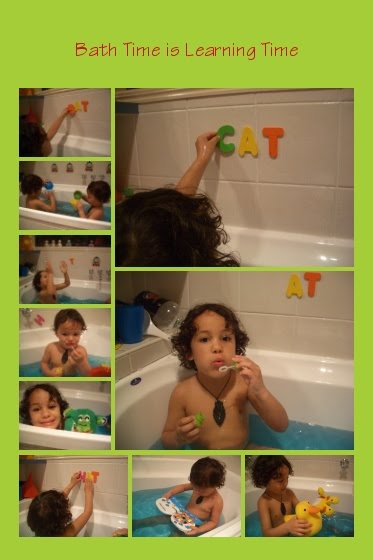
Bath Time Is Learning Time
Making bath time fun? Not an easy task? Does every task associated with bathing and hair washing seem truly torture for your kids; getting their hair wet, getting water or soap in their eyes, refusing to hold washcloths over their face when you're trying to rinse... Bath time can be fun or it can be a real hassle if your child does not like it. So, we as mums, try to make it a fun time for our little ones! Then the problem will be getting them out!!! Admittedly I struggle with all of the above night in and night out with both my boys, and am the first to give a"silent yippee" in the air when their dad makes it home to do bath time(which is not too often!) Bathing one is fine, as I'm sure you agree, bathing two or more can end up feeling like an octopus wrestling Siberian tigers!!- Sing Songs Together
Kids love to sing and to be sung to. Bath time songs like "Rubber Ducky" and "Splish Splash I Was Taking A Bath" are great bath time songs. When my children were very young we played "This Little Piggy" as I washed each toe.
- Measure It
Measuring cups are fun for pouring and filling in the tub and if you have an old set they are a great free fun set of toys for the tub. They can stack and pour to their hearts content and maybe even learn to wet their hair for washing. Control gives many children the power to overcome fears such as getting their hair wet for washing.
Learning time can be created through the use of measures. Take the one cup measuring cup and ask the child how many of each cup it will take to fill your big cup.
- Color It
Bubble bath can be irritating to little ones causing urinary tract infections, yeast infections, as well as skin irritation. A few drops of food coloring is a wonderful solution adding interest and fun to your child’s bath. You can also turn each bath into a learning experience; drop one color in, such as red, then ask your child what they think will happen if you add a drop of yellow.
- Counting down from 10 or 20 during rinsing
- Soap bubbles - mix liquid soap, food coloring, and soap flakes together in a bowl. Let the children paint with the soap bubbles on the tiles around the tub or on the insides of the tub. This mixture can be used like finger paint and will wash off easily.
- Food coloring in the water - two or three drops will turn the water different colors and will not harm the children. Mix colors together to make new colors.
- Pails and paintbrushes - "paint" the tub, tiled walls, faucets, and tub toys with water.
- Floating and sinking - gather items of different sizes and weights and place them in the tub one at a time while playing the game "Sink?" or "Float?"
Fishing pole - make out of paper towel cardboard or other safe material, and "go fishing" in the tub for toys.
- Ice cubes - put one or two in the tub to play with and to watch as they melt. Talk about water and how it can be frozen to make ice and how ice can be melted to make water.
- Boats - make out of empty milk cartons or plastic bottles.
- Buy some bath time letters A-Z and numbers 1-10 that are scrambled around all sides of the bath. After asking about Master 4's day and what he did, we move onto a little bit of revision I guess you could say. But simple things, simple words, like cat, dog, etc that he can use the letters to make the word.
- Alternate bath toys as much as possible so that the kids always find something which is fun to play with.
- Sculpture from shaving foam is also bath time fun activity and you can squeeze some large splotches of shaving foam on the hand of the child or the bath and let the child imagine after that.
- You can take the opportunity at the bath time for kids to introduce them to different types of music as well as to story on CD’s or tapes.
- Read bath books to your child - great for when your little one is very tired and may not stay awake for a story that night.
- You can give the kids a special treat at the bath time for kids, by having bubble blowing mixture in the bathroom, but be careful that it does not get into the eyes of the child or anyone else.
- Buy bath crayons to draw with, learn to write your name.
Co-operative Play

• Create a garden. Block out part of your yard for an area where children can plant flowers and vegetables. Let your kids and their friends work together to make a drawing of the garden they'd like to create. As they plan and then work on their garden, point out how they're all contributing. Encourage them to take on different jobs, such as planting, monitoring, and watering. This project requires all of the little planters to share ideas and tasks: The bounty the garden bears will truly be the product of every one's labor.
Outdoor Activities (exercise their ability to cooperate as they build gross-motor skills.)
- Construction site. As children play in the yard or sandbox with trucks, pails, and shovels, they can deliver the sand or dirt, pretending they are preparing a construction site. Each child can be a different kind of worker (such as steam shovel operator, trench digger, or truck driver). Encourage the little builders to take turns using different vehicles as they work on the project and collaborate on building something.
Artful Collaborations
Creating works of art is a wonderful way to promote cooperation while helping children develop their creative-thinking and fine-motor skills.
- Table paint. Tape a large sheet of paper over a low table and let two or more children finger paint all over the paper. They'll love squishing their fingers and hands through the paint — and they'll each help to create a unique painting.
- Build something. Using play dough or clay, children can collaborate on making a zoo, a pet shop, a bakery, a house, or a toyshop. Encourage them to help each other create the animals and objects that they want in their setting. Ask the kids to describe how they each contributed to the project.
Toys to Share
Not all toys lend themselves to cooperative play — some are simply best for alone time. When your child is having friends over or playing with a sibling, it's best to provide toys and games that work well with small groups. Try putting out these playthings, all of which are easy to share:
• Musical instruments: From maracas to tambourines, using instruments together allows children to make music they couldn't create on their own. When kids form a band, they hear the power of collaborating.
• Puppets, dolls, and stuffed animals: Playmates can bring inanimate pals to life and act out tales and adventures with more than one character.
• Children's books: Kids love sharing cherished stories. Encourage them to each take on a different character's voice and make the sounds described in the story as they read or retell the tale together.
• Puzzles: Putting all the pieces in place is easier — and more enjoyable — when little problem solvers put their heads together.
• Figures, cars, and blocks: By building with blocks, adding figures, cars, road signs, and the like, children learn from one an other's ideas and see how the power of group play can add fun.
• Dress-up clothes: Old hats, bags, shoes, and shirts are perfect props for letting children share imaginative ideas and transform themselves into an infinite roster of roles.